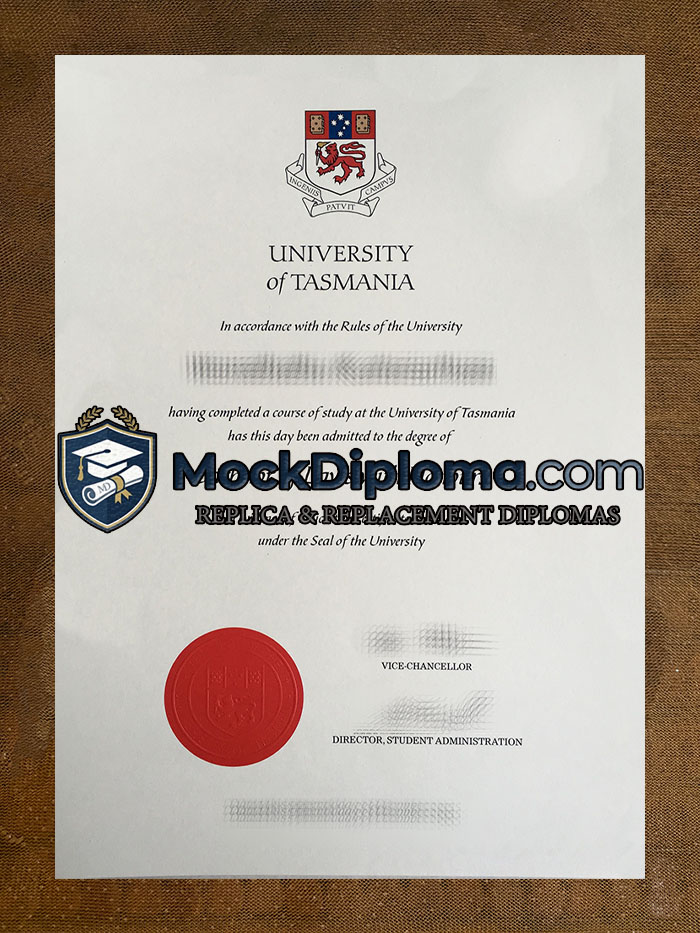
Founded in 1890, the University of Tasmania (UTAS) is Australia’s fourth oldest university and a proud member of the prestigious sandstone universities. University of Tasmania diploma,Purchase a University of Tasmania certificate. Rooted in a history of resilience and transformation, today it stands as a globally recognized institution, celebrated for its profound commitment to sustainability, cutting-edge research, and its deep connection to the island state it serves. As the world’s leading university for climate action, UTAS offers students a unique opportunity to learn from and contribute to solving the most pressing challenges of our time, all within one of the planet’s most inspiring natural classrooms.
The establishment of the University of Tasmania was not without its controversies. In its early years, some members of Parliament viewed the fledgling institution as an unnecessary luxury, and its encouragement of female students drew criticism. Starting with just three lecturers and a handful of students in 1893, the university faced economic depressions and political battles. Despite these humble and precarious beginnings, the university grew, with its early graduates becoming influential figures in law and politics. The mid-20th century brought further trials, including a celebrated battle for academic freedom that ultimately led to a strengthened tenure system and significant reforms. This history of overcoming adversity has forged a resilient and progressive character that defines the university today.
The University of Tasmania’s physical presence is distributed across the state, with major campuses in Hobart, Launceston, and Burnie. Its main Sandy Bay campus in Hobart, developed in the 1960s, overlooks the Derwent River and provides stunning views of Mount Wellington. The university is continually investing in its infrastructure; the historic Sandy Bay campus remains a hub for learning, complemented by modern facilities like the “Forest” site, a revitalized learning centre in Hobart’s Midtown. Its Northern Transformation projects have culminated in “The Shed” in Launceston, a state-of-the-art facility that now serves as the home for allied health programs. The campuses are vibrant, offering extensive amenities including libraries, sports facilities, computer labs, and student lounges, creating a dynamic environment for students.
With a student body of approximately 29,000, UTAS offers a more personalized educational experience. How real are the University of Tasmania degree online we made? The university prides itself on providing students with greater access to supervisors and administrative staff, fostering an environment where students are known and supported. This commitment is reflected in its teaching quality and graduate outcomes, ensuring students are well-prepared for their future careers. The university’s “Tasmanian Transitions” initiative is a long-term commitment to tackling critical issues like health, productivity, and climate, creating tangible opportunities for students to engage in real-world problem-solving.
UTAS’s mission is inherently tied to Tasmania. Its work is shaped by a “deep commitment to improving lives and building a better future – for and from our island”. This is evident in its efforts to address critical workforce shortages by training doctors, nurses, and pharmacists in regional areas, with a majority of its medical cohort being Tasmanian. The university also fosters vital partnerships with the Tasmanian Health Service, the Department for Education, and industry leaders like Hydro Tasmania and the CSIRO to drive sustainable innovation and evidence-based policy. Whether exploring the remote regions of Antarctica, safeguarding threatened ecosystems, or training the next generation of doctors, the University of Tasmania is a university that combines a deep sense of place with a truly global impact.